Why the U.S. Crypto Regulation 'CLARITY' Act Matters
Mar 18 2026
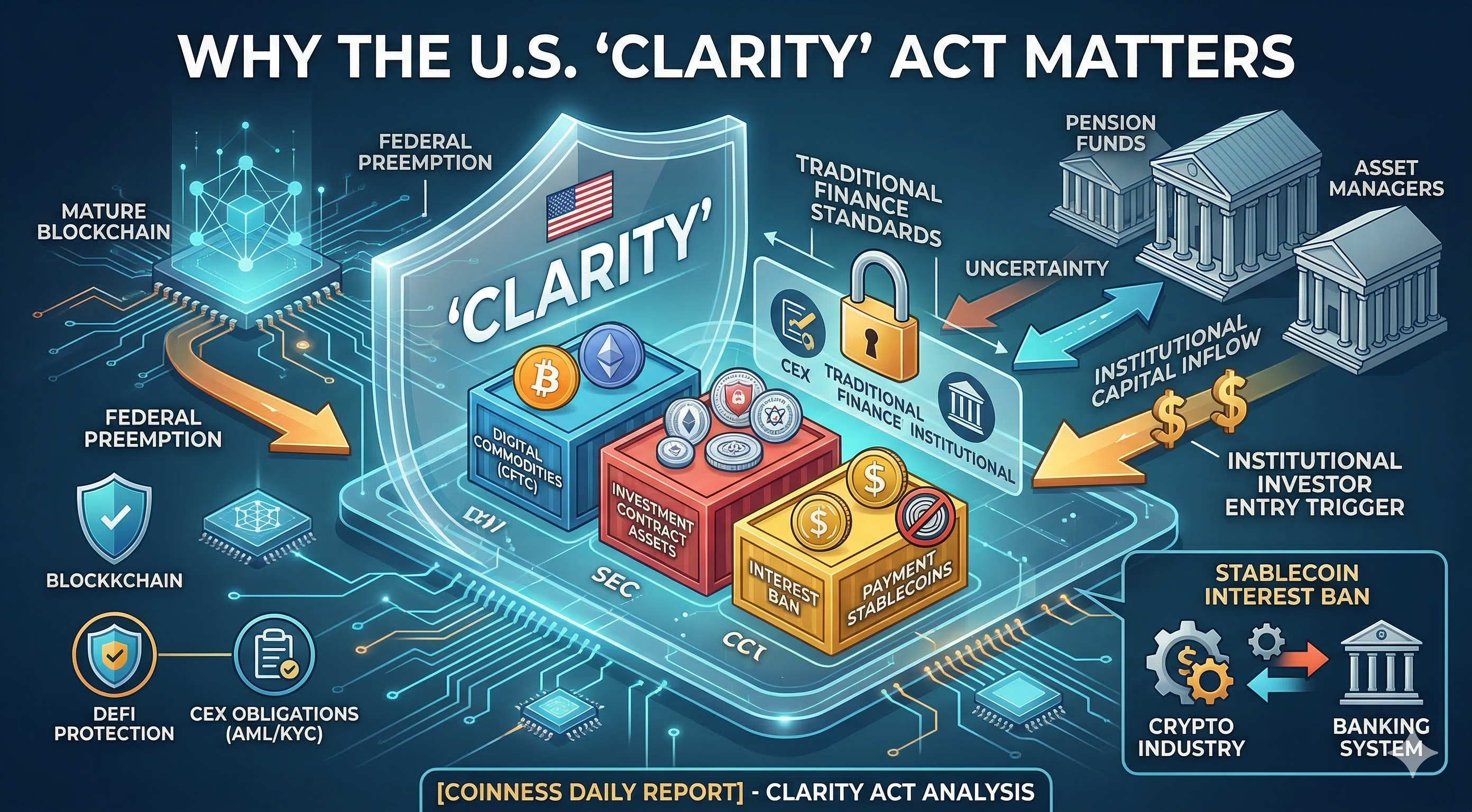
The Digital Asset Market Clarity Act of 2025 (CLARITY) is drawing global attention. It aims to resolve regulatory ambiguity and serve as a trigger for institutional capital inflow.
What is the CLARITY Act?
Classification: Categorizes crypto into Digital Commodities, Investment Contract Assets (Securities), and Payment Stablecoins. CFTC and SEC share jurisdiction. Note: Interest payments on payment stablecoins are prohibited.
Mature Blockchain Standard: Projects that are sufficiently decentralized and have immutable code are classified as commodities.
Provisional Registration: Allows exchanges to operate temporarily if they meet disclosure and custody standards before full CFTC implementation.
Traditional Finance Standards: Applies TradFi-level compliance to crypto operations.
DeFi Protection & CEX Obligations: DeFi developers are not considered financial intermediaries, while centralized exchanges must enforce strict AML/KYC.
Federal Preemption: Federal regulations take precedence over state laws.
Why is it Important? The act eliminates investment uncertainty. Currently, many institutional investors and pension funds hesitate due to a lack of legal clarity. Passing the bill could trigger a massive influx of capital and mainstream tech adoption. It also ends the long-standing jurisdictional battle between the SEC and CFTC, potentially stopping indiscriminate lawsuits against crypto firms.
Why the Delay? The main hurdle is the prohibition of interest on stablecoins. The crypto industry argues this stifles innovation, while banks fear a massive drain of deposits, as stablecoin yields (4-5%) far exceed traditional savings rates.
Current Status & Outlook The bill is currently in the third stage (awaiting a Senate floor vote). Key variables include the compromise between Coinbase (industry) and JP Morgan (banking), as well as the upcoming November mid-term elections. If a consensus isn't reached by the first half of the year, the process may stall until late 2026.
By. Jong-hyung Kim, Coinness Content Team