How Can "Strategy" Keep Buying Bitcoin?
Mar 19 2026
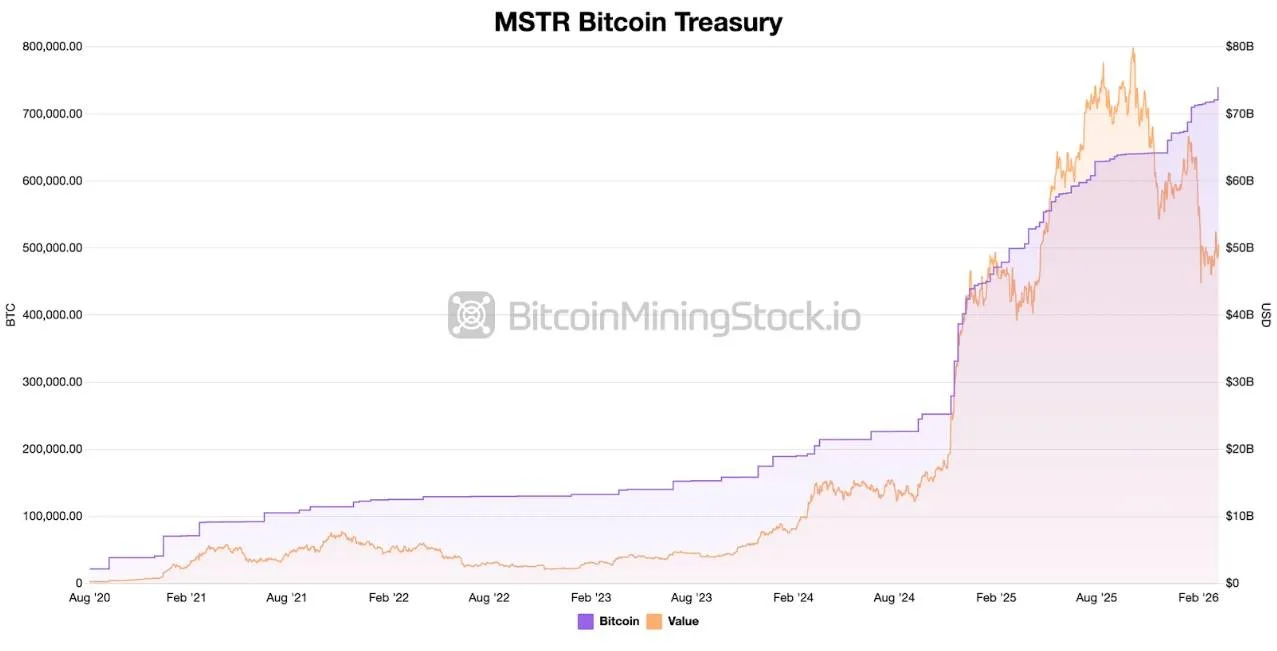
"Strategy" (MSTR), the "Digital Whale" holding over 730,000 BTC, is conducting a massive experiment against the global financial sector. Beyond simply buying coins, they are operating a "Bitcoin Infinite Multiplication" flywheel using original financial engineering called STRC and $mNAV$. Is their move, which blurs the boundaries between cryptocurrency and traditional capital markets, a protector of the market or a ticking time bomb? We dig into the reality of Strategy's unique treasury strategy.
Strategy's Bitcoin Standard Strategy
Strategy is a company whose core business is software development and supply. However, it is now better known as a major player in the cryptocurrency market, accumulating Bitcoin on a large scale.
Strategy recognizes Bitcoin as a core asset to respond to inflation and currency devaluation and continues its long-term holding strategy—operating a treasury strategy centered on the so-called "Bitcoin Standard."
To this end, Strategy secures funds for Bitcoin purchases using not only profits from its main business but also by leveraging capital markets through paid-in capital increases, convertible bonds, corporate bonds, and the issuance of Perpetual Preferred Stock (STRC). They aren't just buying Bitcoin with surplus cash; it is no exaggeration to say they are raising funds by putting the company's entire value at stake to invest in Bitcoin.
Through these funds borrowed from financial markets, Strategy continues to purchase additional Bitcoin. Currently, Strategy holds a total of 738,731 BTC ($56.04 billion).
How Does Strategy Raise Funds? STRC and $mNAV$
To raise funds for Bitcoin purchases, Strategy issues a unique type of stock called STRC. The biggest feature of STRC is that it provides high dividends to shareholders while ensuring the stock price does not drop significantly below face value. As of March, the dividend rate for STRC is set high at 11.5% per annum.
With low concern over price drops and high dividend rates, it effectively functions like a high-yield deposit. Indeed, STRC is gaining popularity among institutional investors as a short-term cash management tool. On the 11th, STRC's daily trading volume reached $409 million, a record high.
How can STRC offer high dividends without a significant price drop? Strategy adjusts the dividend rate monthly to maintain the STRC price around $100. If the Bitcoin price falls, investors might sell STRC, causing the price to drop. At this point, the company defends the price by raising the dividend rate (e.g., from 11% to 12%) to increase investment incentives.
Conversely, if Bitcoin prices rise and the stock price goes up, they lower the dividend rate to 8-9% to prevent the price from exceeding $100. The name "Stretch" in STRC signifies this ability to expand and contract the dividend rate like a rubber band. Simultaneously, if STRC rises significantly above face value, Strategy can issue additional shares to increase supply and adjust the price back to par. The funds raised through this issuance are then used to buy more Bitcoin.
The $mNAV$ Multiplier: Infinite Multiplication
Another key term is $mNAV$, which represents the ratio of the stock price relative to the value of the Bitcoin held by the company. Strategy’s core business model is the infinite multiplication of Bitcoin using the $mNAV$ premium.
When $mNAV > 1$, it means Strategy’s stock price is higher than the value of its Bitcoin holdings. In this state, Strategy can issue shares to raise cash and buy Bitcoin, securing more Bitcoin than the actual value of the issued equity. If the number of shares increases by 10% but Bitcoin holdings increase by 20%, the "Bitcoin per share" for existing shareholders actually rises. In 2025 alone, despite massive share issuance, Strategy succeeded in increasing its Bitcoin holdings per share by 22.8%.
What if $mNAV < 1$? Strategy immediately enters defense mode. It stops issuing shares and uses its cash reserves to buy back its own stock (MSTR) to forcibly maintain the Bitcoin per share ratio. Simultaneously, it aggressively hikes STRC dividend rates to encourage investors to move from common stock (MSTR) to stable preferred stock (STRC) instead of leaving the market.
Savior of the Market or Systemic Risk?
Strategy’s mechanism for channeling traditional financial market capital directly into the crypto market is significant. Currently, many public companies like MARA Holdings, Metaplanet, Riot Platforms, and Coinbase are joining this Bitcoin holding strategy. Total Bitcoin held by global public companies is approximately 1 million to 1.1 million BTC, accounting for 5-6% of the total supply.
However, Strategy’s presence is also perceived as a potential risk. If Bitcoin prices crash, it could apply structural downward pressure on the entire market. Concerns might spread that the "Big Whale" will stop buying or, worse, dump Bitcoin to improve its financial situation. Rumors early this year that Strategy might have to sell Bitcoin to cover high dividends when $mNAV$ fell to 0.8 acted as a market negative.
Furthermore, there is pressure from convertible bond repayments. Strategy has issued billions of dollars in convertible bonds. If the stock price remains below the conversion price at the massive maturity dates in 2027-2028, creditors may demand cash repayment, potentially forcing the company to sell Bitcoin or conduct massive equity offerings.
The Index Exclusion Risk
Last year, MSCI raised questions about whether a company with such large Bitcoin holdings could be viewed as a standard operating company. They introduced guidelines to exclude "Digital Asset Treasury (DAT)" companies—those with over 50% of assets in digital assets—from indices like MSCI World. Exclusion would mean forced selling by global index funds and ETFs. While MSCI decided not to exclude them immediately, the fear (FUD) alone caused significant volatility.
By. Min-cheol Jung, Coinness Content Editor